
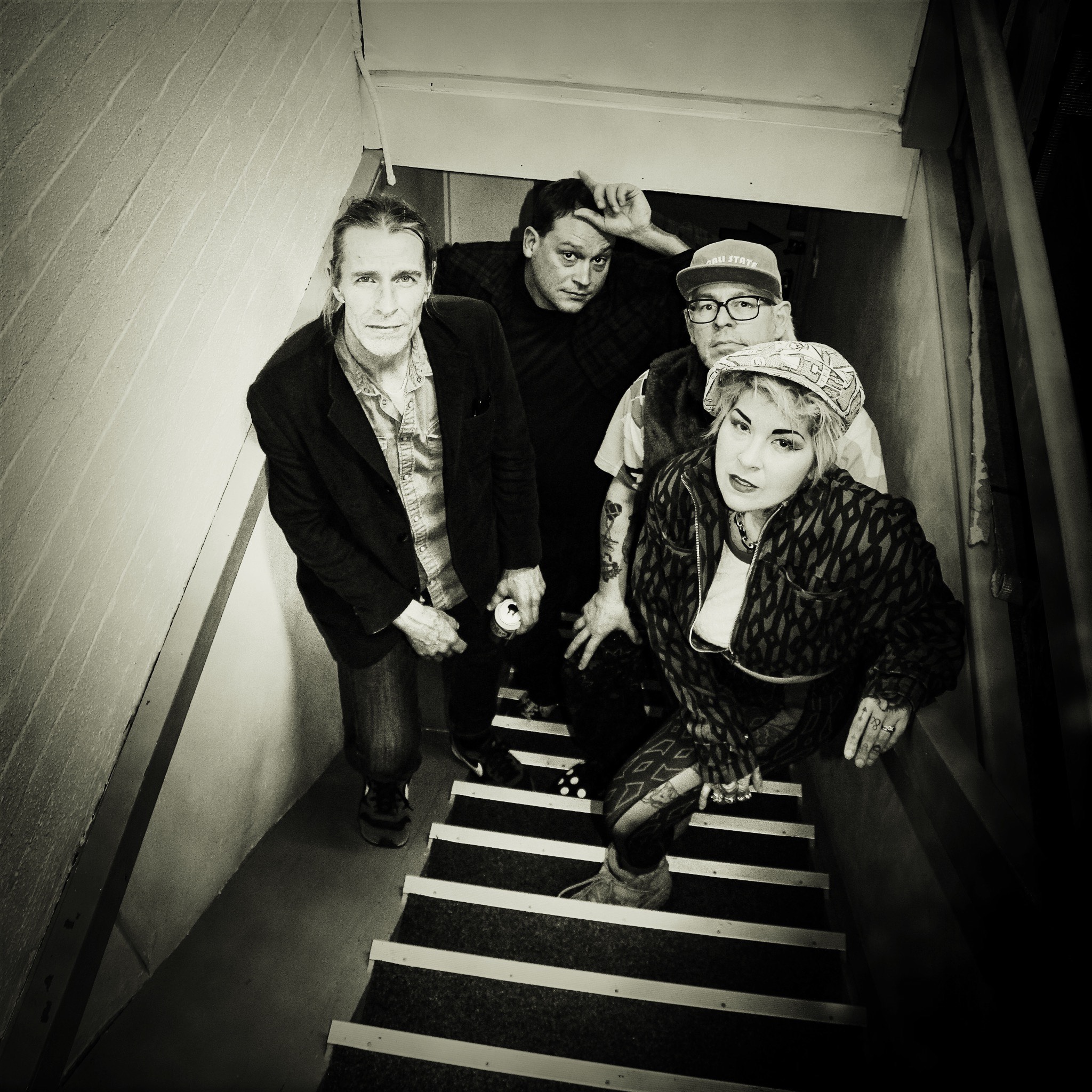
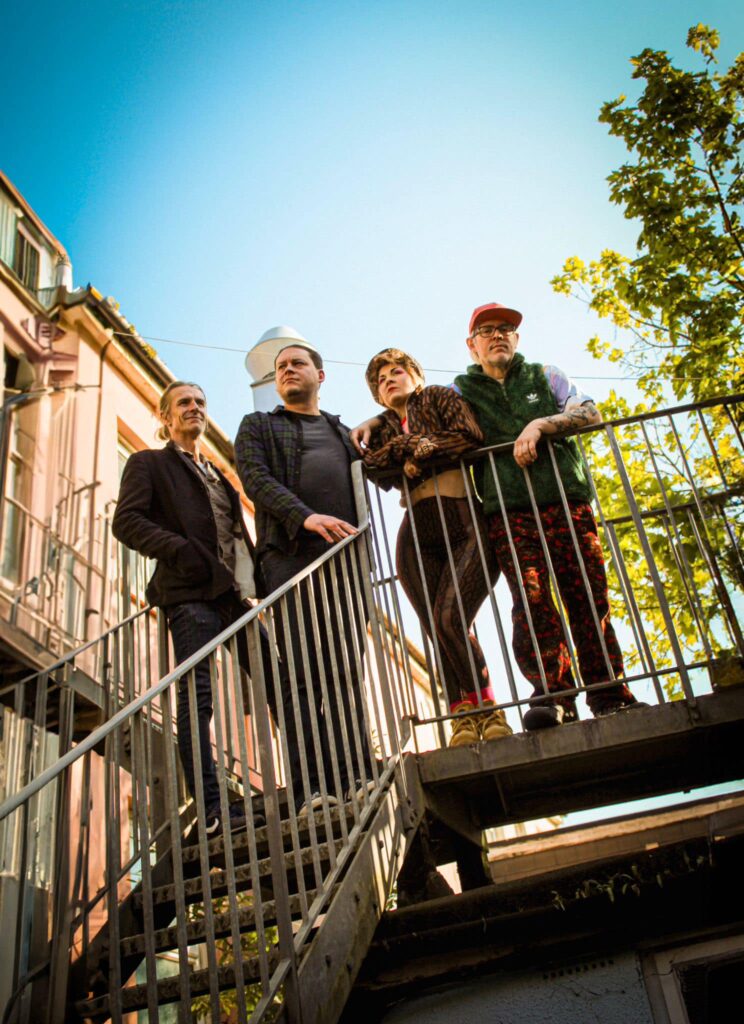
Dateless Wonder Club are a four-piece from Brighton who describe their sound as synth-driven storytelling post-punk. Most of their songs are based on true stories, and dark ones at that, from a murder ballad retold as a Nordic noir to a wrestler who took revenge on a notorious TV star. The band formed in 2023 and have just released a new EP, Little Death, which they launched at The Prince Albert in Brighton.
I asked lyricist and lead singer Nick about the band, the name, the stories behind the songs and what comes next. Here is the interview in full.
In a couple of sentences, how would you introduce Dateless Wonder Club to someone who has never heard you?
We are a synth-driven storytelling post-punk band who draw from post-punk, alt-rock, synth-pop, darkwave and indie, with lyrics that exposes the underbelly of the human condition in all of its messy glory.
Who is in the band, and how did you all come together?
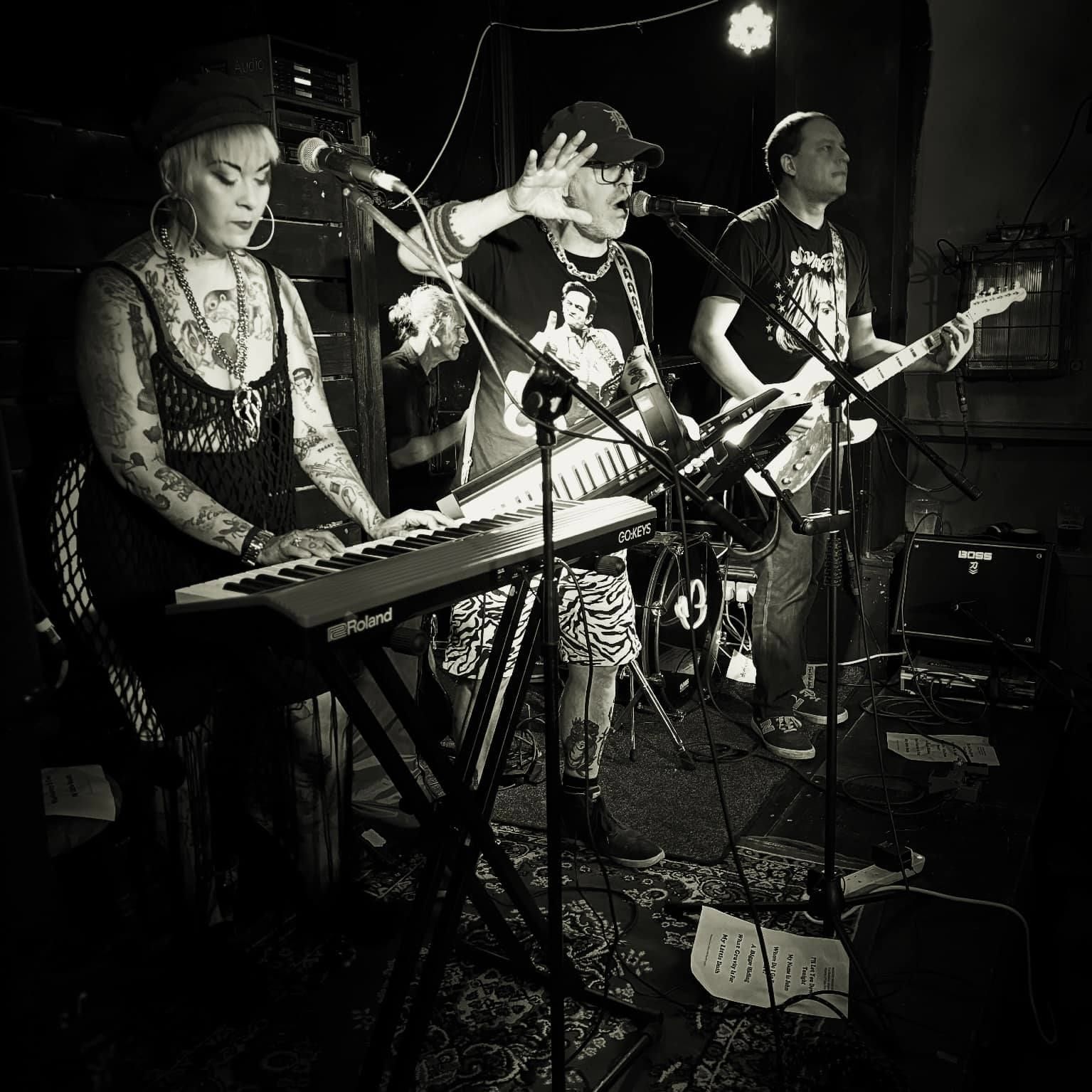
Three of the band – Ben (drums), Hannah (keys and vocals) and Niall (guitars) – are from the historic county of Sussex in the UK and I am the lyricist, lead singer and keytarist who hails from Sarf London, innit? We all came to music from quite different directions. Ben learnt his trade as a teenager in touring blues bands, before eventually moving into the metal genre. Hannah trained as a cellist before rebelling and converting to bass in a student band and then not playing for years. Niall was in noughties indie scamps and NME loved Mumm-ra, with his best friends, that had a record deal with Columbia, one hit song, played Glastonbury and toured Japan before mutually fading out. I was in a string of different bands (punk folk, baggy, trip hop – you name it) before co-founding Brighton’s now long running experimental electronic musicians collective The Spirit of Gravity, but then like Hannah, also had a break. Hannah and I started an indie folk band before we married 9 years ago and when that ended we formed DWC in 2023, bringing in Niall who co-owned our local micropub and Ben who I worked with.
Where did the name Dateless Wonder Club come from?
Before we were in DWC Hannah and I were in an indie folk trio called The Sweet Ordeal. Lyrically we explored very similar subject matter and one of our songs was a true story based on 1970’s American TV journalist Christine Chubbuck, who died by suicide live on air. There never was a clear conclusion as to why she died other than she felt extremely lonely, and she would jokingly tell people she was in the “Dateless Wonder Club”.
This name initially became attached to a Covid lockdown project for Hannah and I, thinking it would be temporary scenario before returning to The Sweet Ordeal. When The Ordeal ended however we kept the name before fully forming into the band we are now. In the end why we kept the title was less about the origin story, but more about how it sounded – it’s the strangeness and specificness of that name which I feel conjures up all kinds of imagination, without giving a clear guess of what a band with that name might present as.
You describe your sound as synth-driven storytelling post punk. What draws you to telling stories in your songs, and where do the stories come from?
As you can now probably tell we draw from the gloomier corners of society. Actors often say that their favourite characters to play are the bad, the evil, the troubled, and as someone who considers myself a writer just as much as a musician, these narratives are more rewarding when you are keen to explore the depths of the human condition. As mentioned I have a folk background and, with Hannah, present Finding Land Folk Show, a folk podcast. It is of course this genre which has such a rich history of storytelling, with murder ballads a particularly interesting and powerful category from the perspective of class, gender, fantasy and reality.
Our storytelling therefore fits quite nicely within the folk tradition. I collect dark and esoteric stories from the news and then cherry pick those to then explore through lyrics. However, instead of just creating grim and lurid tabloid fodder we always find some shard of light and hope to show how the humans can someway triumph in the most extreme circumstances, which is often why our fans don’t really think we are miserable.
Two of my favourite songwriters Kate Bush and REM’s Michael Stipe both prefer to inhabit characters in their lyrics rather than write personal songs, and I am the same. It means you can sometimes be more ambiguous and therefore ambitious if it enhances the storytelling, because you don’t always have to take a side to challenging subject matter, whereas singing as yourself often then brings expectations of taking a binary position.
For example, our song about Christine Chubbuck is more ambiguous but is a cry of defiance, whilst our title track on our previous EP “A Bigger Hiding” on the face of it is about the notorious Jimmy Savile, before we soon realise it is about the magnificent Welsh wrestler Adrian Street who knew what Savile was at the height of his fame and in revenge smashed the hell out of him in an exhibition wrestling match.
Which artists or records shaped your sound?
This is the most difficult one to answer as we have such varied individual influences as a group, so it is easier to talk in terms of genres than bands. Ben likes literally anything except commercial pop, but tends to lean towards metal and prog in his heavy yet musical drumming style. Hannah is an 80’s electro queen and loves quite repetitive music such as Sparks and Michael Nyman and that comes out in her cyclical keyboard playing. Niall is more of an indie kid and plays quite angular guitar reminiscent of Blur’s Graham Coxon and his bass playing, I guess, comes from his previous parish of Mumm-ra! Musically I probably lean towards the likes of Neil Young and REM but as a lyricist I am more in the folk music storyteller tradition. My vocal style is reminiscent of original post punk, I think, but that’s just genetics. I try and swing between goth rock and alt rock vocally. How these influences then mash up to people saying we are like a “Gothic B52’s” or a “Dark David Byrne” is anyone’s guess!
Tell us about your latest release. What was the idea behind it, and how was it made?
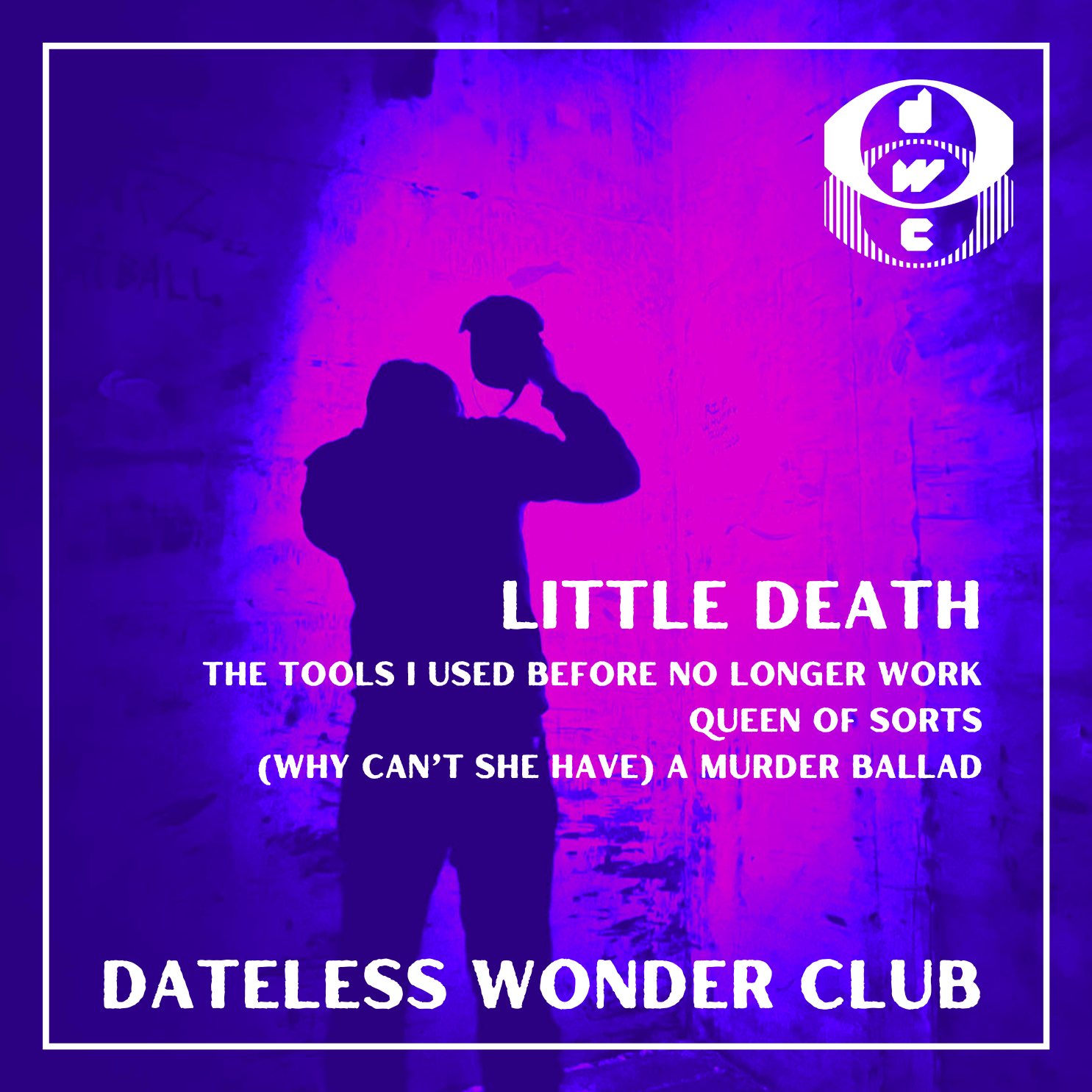
Our latest release is called “Little Death” and is a three track EP with a bonus track. As with our previous EP we decided on a four song release and simply just recorded the four songs that were most ready. It was only really towards the end of production that we realised one track “Queen of Sorts” did not fit musically or lyrically with the others, but rather than ditching it we kept it as a bonus track.
Initially there was no plan other than taking the opportunity to record four more songs. Because with a few exceptions most of our songs are based on true stories, and dark ones at that, there is a natural broad theme without feeling forced. However after we completed the EP I then realised that there was an unintentional narrowing of the themes. Our first EP “A Bigger Hiding” contained three songs based on true stories of male protagonists with one further song having a fictional male protagonist. In an remarkable act of serendipity it turns out that “Little Death” has two songs based on true stories of women, and then one fictional song with a female subject matter, and then one metaphorically with a female protagonist.
Which track should a new listener start with, and why?
Pick only one of our children! I can’t, so I’ll go with audience feedback on our latest EP, which I think is most in favour of (Why Can’t She Have) A Murder Ballad which is based on a traditional 18th century folk song, that’s been variously called ‘Lizzie Wan’, ‘Lucy Wan’ and ‘Fair Lizzie’ and comes from the infamous folk sub-genre of murder ballads.
The original song is a tale of incest, pregnancy, murder and escape, where the title character gets the worst end of the deal.
In the folk world now there are some artists that are re-interpreting these songs and giving agency to the victims, who are usually women or others marginalised by the white male gatekeepers. So in this spirit we updated the ballad in the guise of a Nordic noir. The song references all the ways the brother tried to disguise Lizzie’s murder and turns the table and asks why our female protagonist can’t do the same.
What’s the music scene like in Brighton at the moment, and has it shaped the band?
I would say the scene is vibrant, pretty eclectic, assertive, political, punchy and mouthy. In other words, very Brighton. We’re an older band (our age range is 40’s to late 50’s) so we might have a different perspective because maybe we don’t have a scene we are distinctly attached to, but I think bands are pretty supportive of each other and all the grassroots venue teams and promoters seem like a decent bunch of humans. Whilst there is a constant ongoing battle to keep venues open, Brighton still manages to knock out a magnificent range of live music across the whole week. You want to see a non-binary led electro-folk metal collective on a Tuesday evening in a dank basement, you’ll find it, daddio.
I think where it has shaped us, perhaps because of the opportunities we were initially given, is making our live sound in particular heavier and punkier than we expected when we started. Whilst we have elements of alt rock that I assumed we might sit within, we definitely lean more towards a post punk vibe. I think!
What are your best and worst gig memories so far?
We love playing live and nothing has been disastrous, but best gig was our recent EP launch at The Prince Albert in Brighton, where we got to play more than 30 minutes and we could hear ourselves on stage! Also people who had seen us from the start had said how much we had improved. In terms of worst gigs, there has been nothing to do with the venues, but Niall went through a period where it felt like some piece of equipment would fail just before he started playing. We have also played in front of small audiences, but I am definitely of the opinion that you perform in front of the crowd you want rather than the crowd you see. So I am always playing to packed stadiums!
What’s next for the band, such as new music, live dates or anything else you’d like readers to know about?
We are focusing on promoting “Little Death” and we have a few support slots in that regards in November. Then next year we hope to play some gigs outside Brighton and more festivals inside Brighton. It really is about playing live for us and we just want to pick up more experience further up the bill. It would also be nice to try and record another EP later next year as we have songs ready and waiting and we really need to shoot some live footage as that creates opportunities.
Finally, what are you listening to at the moment?
I haven’t had the chance to ask the rest of the band, so I will just speak for myself. Outside of my folk music podcast research and listening, I am taking a Kate Bush deep dive at the moment, and one can never go wrong there. I always have the likes of Pink Floyd, REM, Neil Young, Lana Del Rey and Black Sabbath bubbling along on the back burner, which is very “dad” something I am sure. In terms of contemporary music my current guilty pleasure is The Beaches (for joie de vivre), but I am also listening to Turnstile (for visceral energy), Mannequin Pussy (for ferocity and vulnerability), Julia Jacklin (for storytelling), Dry Cleaning (for quirkiness and prickliness) and Twen (for bopping).
Nick, lead singer, Dateless Wonder Club
Watch the lyric video for Little Death:
Dateless Wonder Club play The Pipeline in Brighton on Saturday 21 November, supporting IO.
Find Dateless Wonder Club online:
- Bandcamp: https://datelesswonderclubband.bandcamp.com/
- Spotify: https://open.spotify.com/artist/0tPpSPcSFD1dlyX0jvMsR5
- YouTube: https://youtu.be/bbxAqLBR07I
- Instagram: https://www.instagram.com/dateless_wonder_club_band
- Facebook: https://www.facebook.com/profile.php?id=100089454097892
- X: https://x.com/DtlssWndrClb